Top Vacuum Socre brings you a new solution for optimizing valve selection.
Editorial:2025-12-22
Top Vacuum Socre brings you a new solution for optimizing valve selection. In vacuum systems, vacuum system components used to change the direction of airflow, adjust the volume of airflow, cut off or connect pipelines are called vacuum valves. The functions of vacuum valves in vacuum systems are: switching air paths, changing the flow route of airflow; controlling the volume of airflow, adjusting the vacuum degree; and quantitatively inflating. Vacuum valves mainly include vacuum angle valves, vacuum ball valves, vacuum butterfly valves, vacuum diaphragm valves, vacuum gate valves, and vacuum globe valves. Different types of vacuum valves have different applications. Below, we will discuss the characteristics and common areas of use of different types of valves such as gate valves, globe valves, butterfly valves, and ball valves. When configuring and selecting vacuum valves, it is necessary to consider the minimum pressure difference and high flow resistance of components within the molecular flow range. In addition, the valve body and valve seat require the minimum leakage rate. The lubricant on the vacuum side of moving parts in the valve must be suitable for the required pressure and temperature range, or overall exposure to high or ultra-high vacuum should be avoided as much as possible. The minimum harmful (dead) space and large flow conductance are important, especially in the molecular flow range. Firstly, the type of valve should be selected based on the vacuum level. The first principle of valve selection is to ensure compatibility with the vacuum level. Under different vacuum ranges, the flow state of gas, leakage sensitivity, and material outgassing behavior vary significantly. If the valve level is insufficient, it will become a performance bottleneck for the entire system. For low vacuum/medium vacuum systems (≥1 Pa), rubber sealing valves such as KF quick-release valves, soft-seal butterfly valves, and soft-seal angle valves can be selected. These valves are low-cost, quick to open and close, and easy to maintain, making them suitable for industrial applications such as packaging, vacuum drying, and adsorption systems. High vacuum systems (0.1 Pa to 10⁻⁵ Pa) must utilize high vacuum valves, such as ISO flange angle valves, gate valves, and flapper valves. Typically, fluororubber (FKM) or composite sealing structures are employed, featuring low leakage rates and minimal outgassing, thereby meeting the requirements of molecular flow conditions. Ultra-high vacuum systems (≤10⁻⁵ Pa) require the use of fully metal-sealed valves (CF flanges, knife-edge seals). These valves can withstand high-temperature baking and exhibit almost no outgassing, making them a must-have solution for UHV systems. Conclusion: The vacuum level of the valve must be at least one order of magnitude higher than the system design vacuum level.
II. Determining the valve structure based on its function. Valves at different positions serve different functions, which directly affects the selection of structure. The isolation valve (On/Off Valve) is used for complete isolation between the pump and the cavity, as well as between cavities. Common types: Angle valve and gate valve. They are characterized by reliable sealing and clear switching, and are the most common types of vacuum valves. The throttle valve is used to control the pumping rate or stabilize the pressure within the chamber. Common types: Butterfly / Throttle Valve and electric proportional valve are mostly used in scenarios where precise pressure control is required in coating and semiconductor processes. The anti-backflow valve/safety valve prevents gas or oil from flowing back and contaminating the chamber when the vacuum pump is stopped. It is commonly found in the front-end systems of rotary vane pumps and diffusion pumps.
Thirdly, the long-term reliable operation of valves with seals and materials selected based on the process medium largely depends on the adaptability of the medium. For clean, dry air or inert gases, a conventional stainless steel valve body coupled with FKM seals is sufficient to meet the requirements. For water vapor, dust, or corrosive gases, it is recommended to choose: 1. All stainless steel valve body: PTFE or special corrosion-resistant seal 2. Angle valve with simple structure and easy to clean 3. Semiconductor, optical coating process 4. For low particle and low outgassing requirements, priority should be given to: electropolished stainless steel valve body 5. High vacuum grade valve: avoid using ordinary rubber materials.
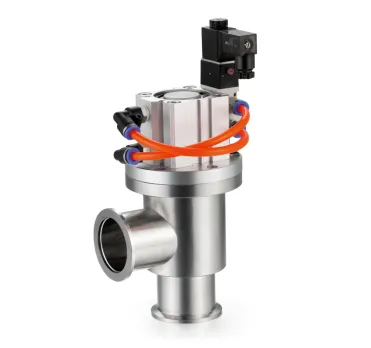
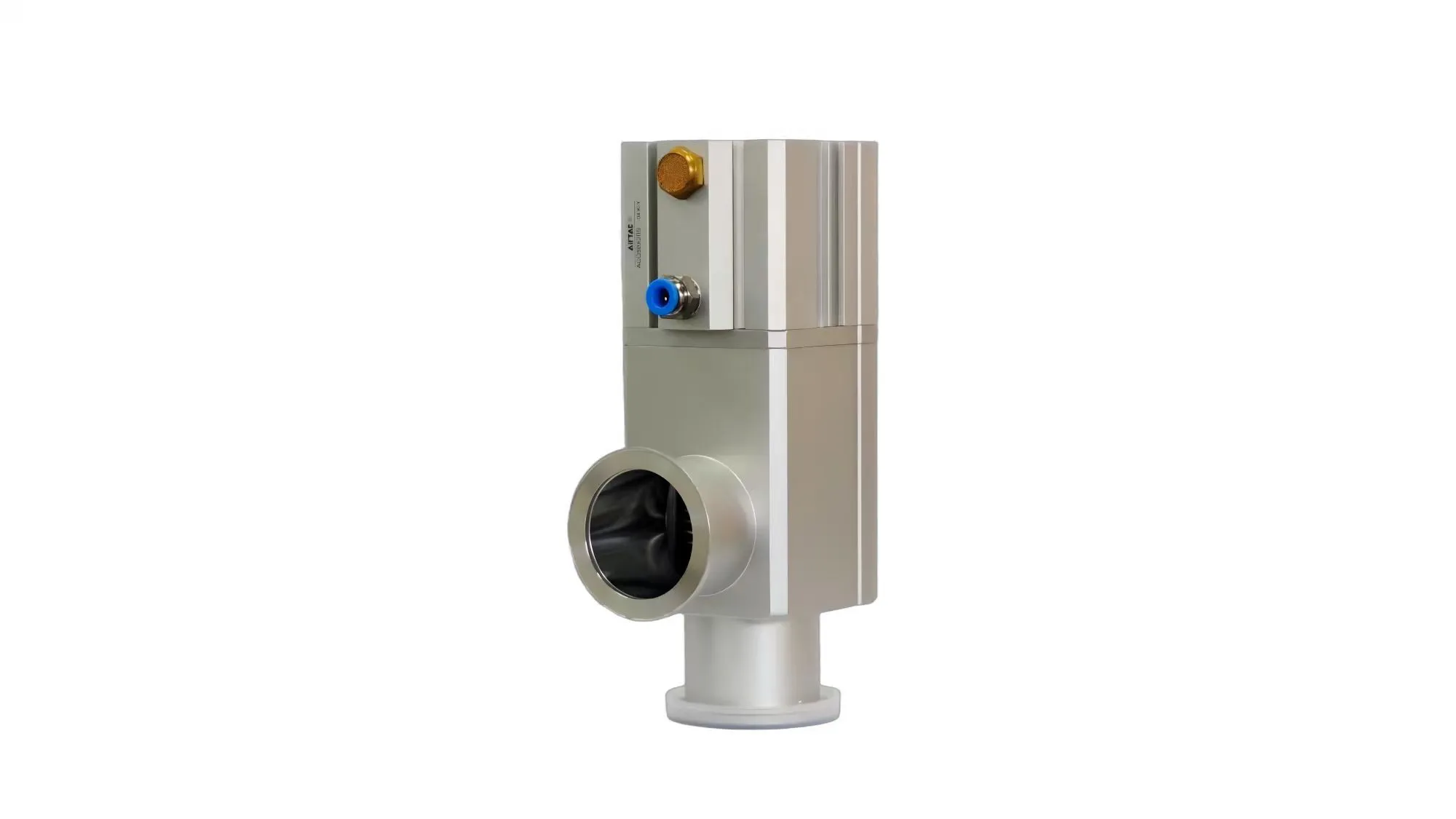
Top Vacuum Socre brings you a new solution for optimizing valve selection. In vacuum systems, vacuum system components used to change the direction of airflow, adjust the volume of airflow, cut off or connect pipelines are called vacuum valves. The functions of vacuum valves in vacuum systems are: switching air paths, changing the flow route of airflow; controlling the volume of airflow, adjusting the vacuum degree; and quantitatively inflating. Vacuum valves mainly include vacuum angle valves, vacuum ball valves, vacuum butterfly valves, vacuum diaphragm valves, vacuum gate valves, and vacuum globe valves. Different types of vacuum valves have different applications. Below, we will discuss the characteristics and common areas of use of different types of valves such as gate valves, globe valves, butterfly valves, and ball valves. When configuring and selecting vacuum valves, it is necessary to consider the minimum pressure difference and high flow resistance of components within the molecular flow range. In addition, the valve body and valve seat require the minimum leakage rate. The lubricant on the vacuum side of moving parts in the valve must be suitable for the required pressure and temperature range, or overall exposure to high or ultra-high vacuum should be avoided as much as possible. The minimum harmful (dead) space and large flow conductance are important, especially in the molecular flow range. Firstly, the type of valve should be selected based on the vacuum level. The first principle of valve selection is to ensure compatibility with the vacuum level. Under different vacuum ranges, the flow state of gas, leakage sensitivity, and material outgassing behavior vary significantly. If the valve level is insufficient, it will become a performance bottleneck for the entire system. For low vacuum/medium vacuum systems (≥1 Pa), rubber sealing valves such as KF quick-release valves, soft-seal butterfly valves, and soft-seal angle valves can be selected. These valves are low-cost, quick to open and close, and easy to maintain, making them suitable for industrial applications such as packaging, vacuum drying, and adsorption systems. High vacuum systems (0.1 Pa to 10⁻⁵ Pa) must utilize high vacuum valves, such as ISO flange angle valves, gate valves, and flapper valves. Typically, fluororubber (FKM) or composite sealing structures are employed, featuring low leakage rates and minimal outgassing, thereby meeting the requirements of molecular flow conditions. Ultra-high vacuum systems (≤10⁻⁵ Pa) require the use of fully metal-sealed valves (CF flanges, knife-edge seals). These valves can withstand high-temperature baking and exhibit almost no outgassing, making them a must-have solution for UHV systems. Conclusion: The vacuum level of the valve must be at least one order of magnitude higher than the system design vacuum level.
II. Determining the valve structure based on its function. Valves at different positions serve different functions, which directly affects the selection of structure. The isolation valve (On/Off Valve) is used for complete isolation between the pump and the cavity, as well as between cavities. Common types: Angle valve and gate valve. They are characterized by reliable sealing and clear switching, and are the most common types of vacuum valves. The throttle valve is used to control the pumping rate or stabilize the pressure within the chamber. Common types: Butterfly / Throttle Valve and electric proportional valve are mostly used in scenarios where precise pressure control is required in coating and semiconductor processes. The anti-backflow valve/safety valve prevents gas or oil from flowing back and contaminating the chamber when the vacuum pump is stopped. It is commonly found in the front-end systems of rotary vane pumps and diffusion pumps.
Thirdly, the long-term reliable operation of valves with seals and materials selected based on the process medium largely depends on the adaptability of the medium. For clean, dry air or inert gases, a conventional stainless steel valve body coupled with FKM seals is sufficient to meet the requirements. For water vapor, dust, or corrosive gases, it is recommended to choose: 1. All stainless steel valve body: PTFE or special corrosion-resistant seal 2. Angle valve with simple structure and easy to clean 3. Semiconductor, optical coating process 4. For low particle and low outgassing requirements, priority should be given to: electropolished stainless steel valve body 5. High vacuum grade valve: avoid using ordinary rubber materials.

Ningbo Top Score Vacuum Technology Co., Ltd is a specialist manufacturer/exporter of vacuum products.


Copyright © 2024 Ningbo Top Score Vacuum Technology Co.,Ltd.