Analysis of application scenarios of vacuum system technology in the chemical industry
Editorial:2025-12-16
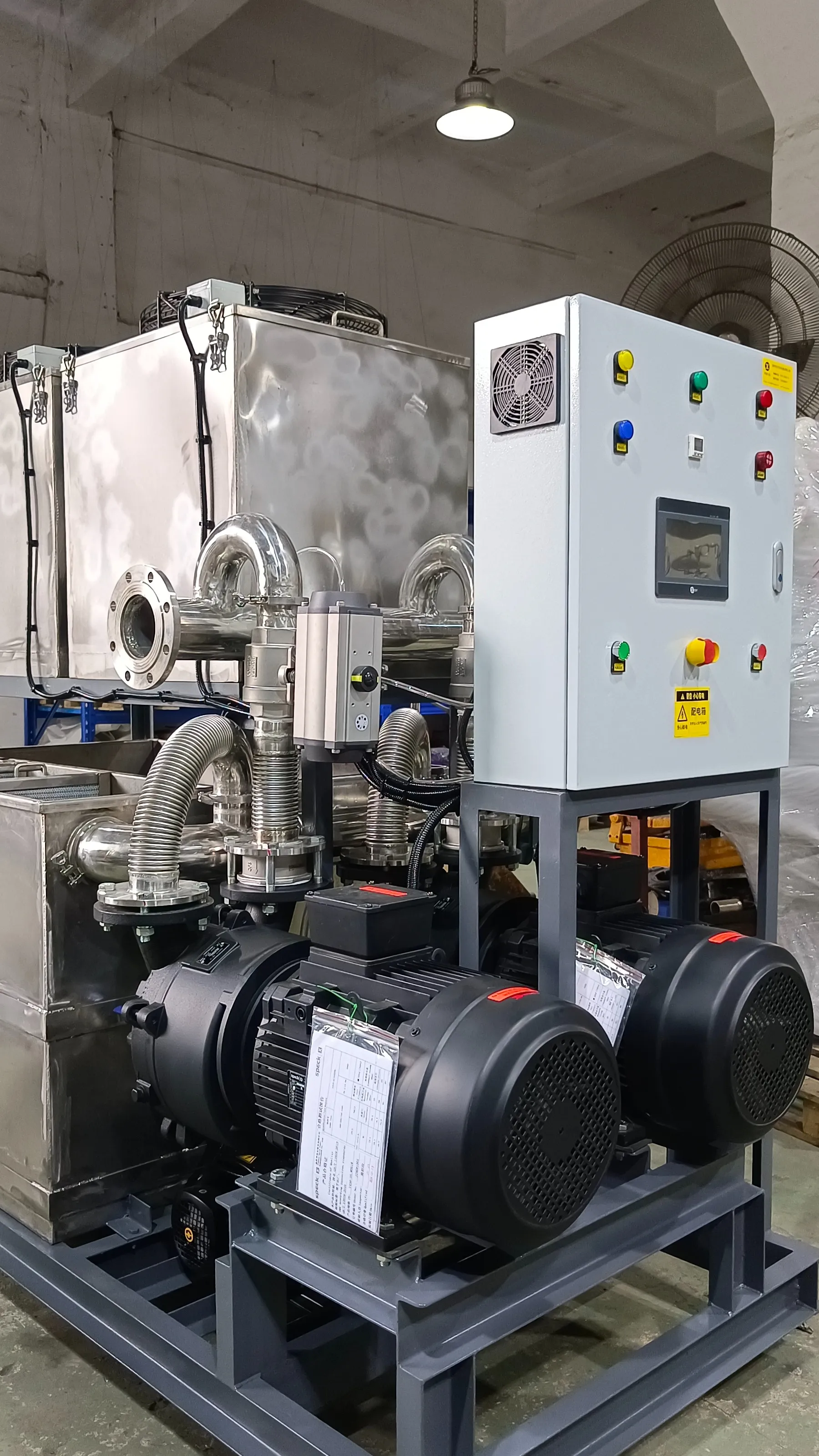
1. Vacuum distillation and rectification Process purpose: To achieve the separation and purification of high boiling point or heat-sensitive substances, such as crude oil separation, solvent recovery (ethanol, acetone, essential oils, etc.) and azeotrope separation (ethanol-water system) in petrochemical industry.
The function of the vacuum system is to significantly reduce the boiling point of materials by lowering the system pressure (with the vacuum level typically controlled between 1-10 mbar), thereby preventing component decomposition or deterioration caused by high temperatures.
Typical equipment: MVR evaporator, Roots-liquid ring vacuum unit, distillation column-condenser-reflux drum unit.
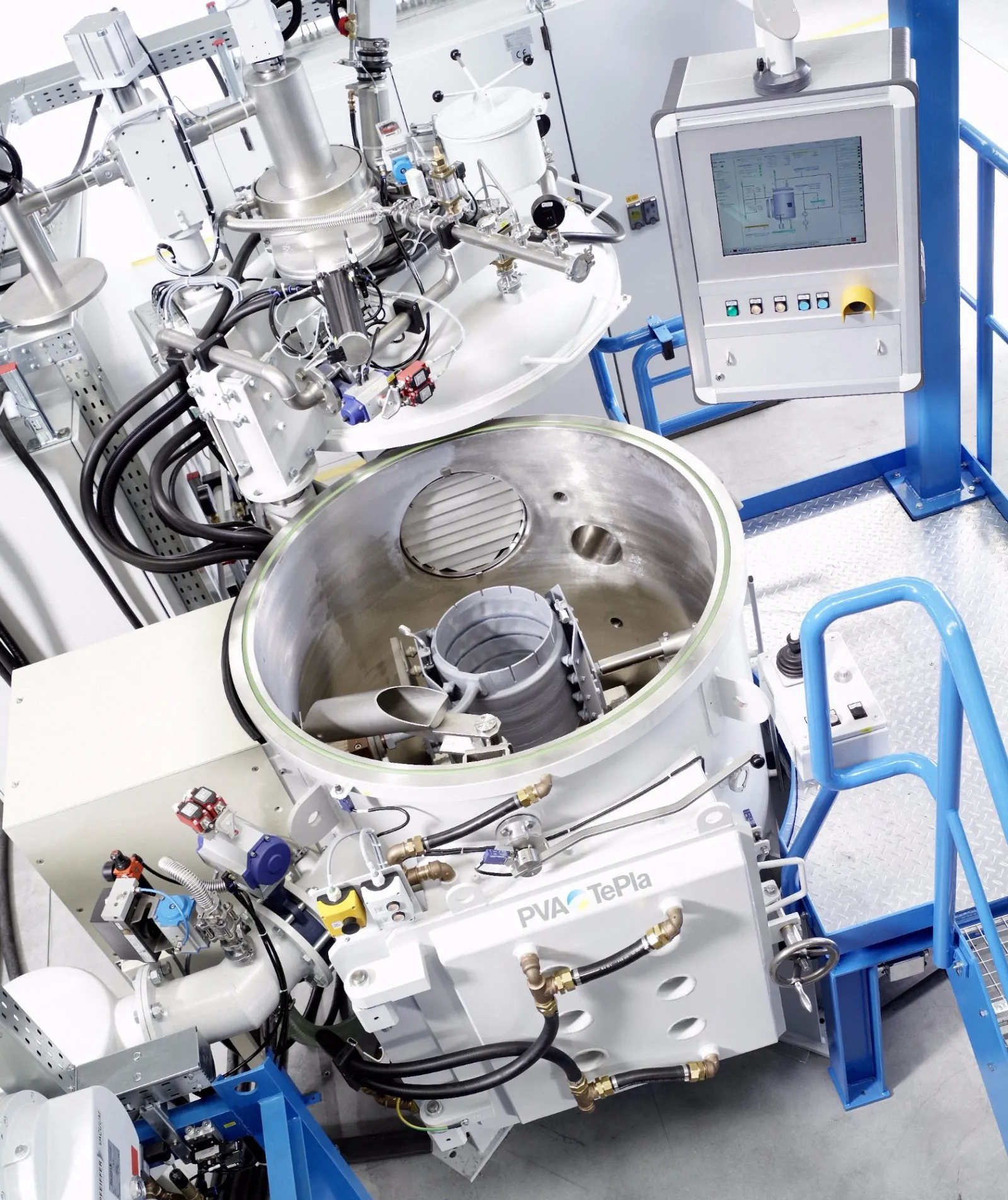
2. Purpose of reaction kettle and polymerization process: To provide an inert environment for polymerization reactions (such as polyethylene and resin production), remove volatile components (such as low molecular weight by-products and solvents) from the reaction system, avoid oxidative side reactions, and enhance product purity.
Function of vacuum system: Maintain a high vacuum environment (vacuum degree of 0.1-100 Pa) inside the reaction kettle, accelerate the escape of volatile substances, and control the reaction rate through gas extraction.
Typical equipment: oil-free vacuum pump (anti-corrosion type), negative pressure Roots blower, vacuum reaction kettle.
3. Purpose of drying and evaporation process: For heat-sensitive or easily oxidizable materials such as fertilizers, dyes, and pharmaceutical intermediates, it aims to achieve efficient dehydration and drying at low temperatures, protecting the active components or crystal structure of the materials.
Function of vacuum system: By creating a negative pressure environment (vacuum degree of 10-100 Pa) to reduce the boiling point of materials, coupled with heating at 50-150℃, "low-temperature rapid drying" is achieved, with a drying efficiency 30%-50% higher than that of the normal pressure process.
Typical equipment: double-cone dryer, hot plate continuous vacuum dryer, rake vacuum dryer (applicable to thick/paste materials).
4. Purpose of powder material conveying process: To achieve safe and continuous conveyance of flammable, explosive, toxic, or high-viscosity powders (such as nitrocellulose, resin, silane), avoiding friction sparks or material contamination caused by mechanical contact.
Function of vacuum system: A stable negative pressure environment is created through an explosion-proof vacuum negative pressure pneumatic conveying system, utilizing gas kinetic energy to propel material flow within a sealed pipeline, with no mechanical transmission contact throughout the process.
Typical equipment: explosion-proof vacuum negative pressure pneumatic conveying system, claw-type dry vacuum pump (dust-resistant).
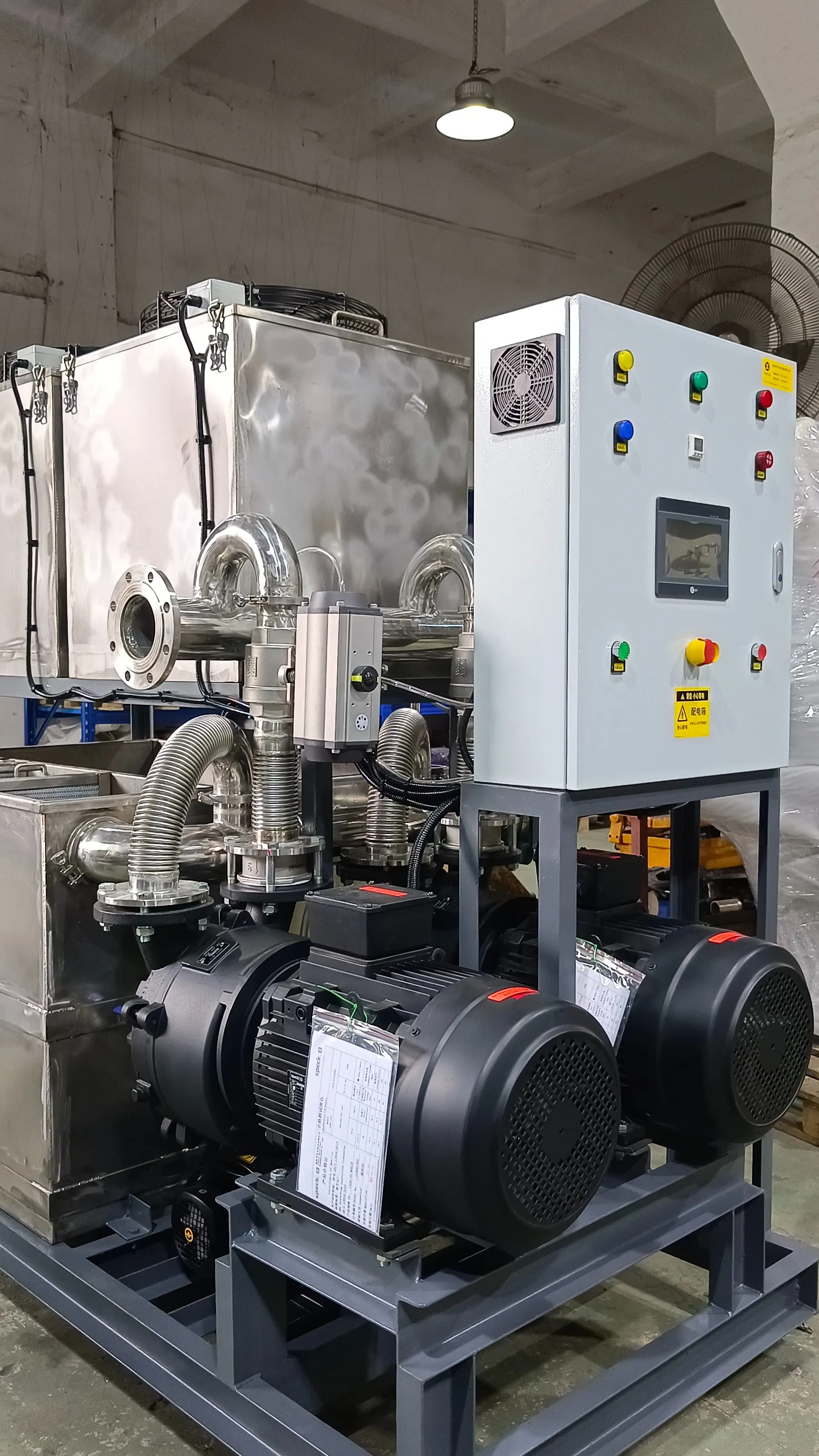
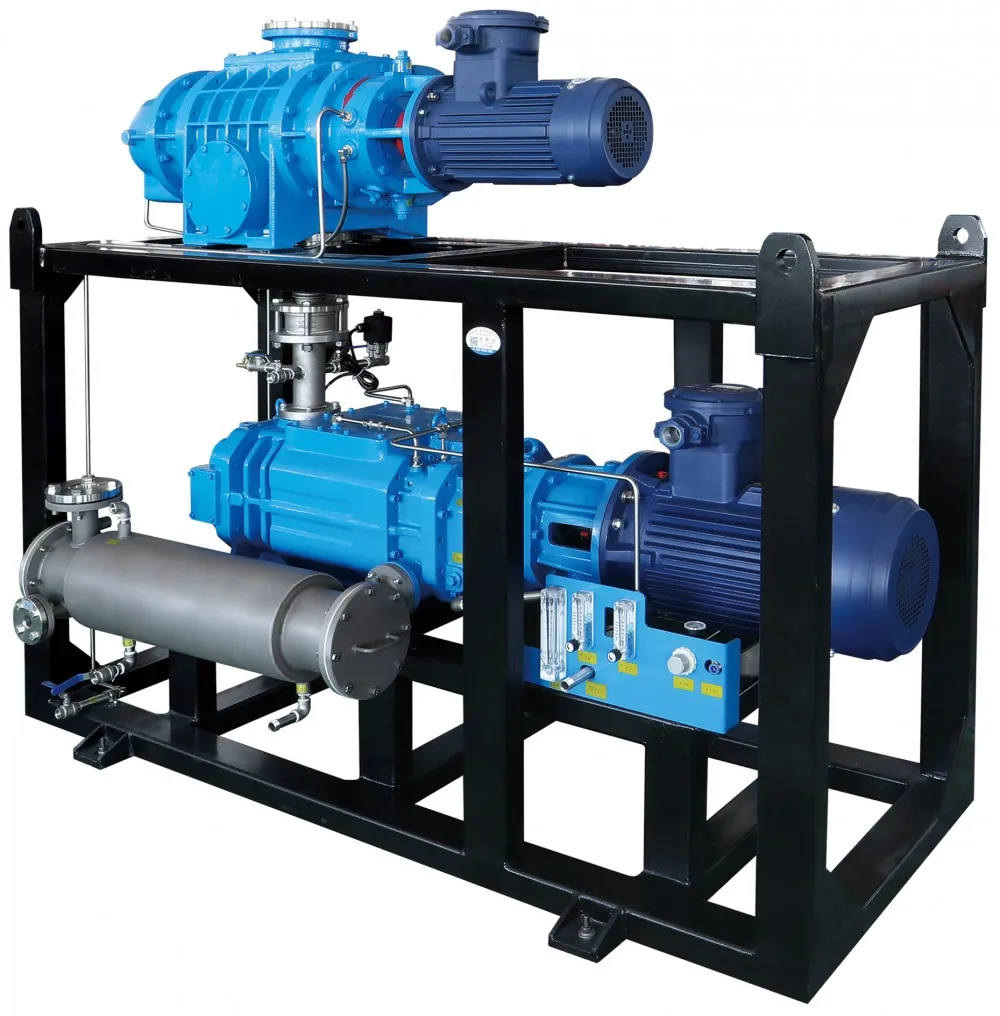
5. Solvent recovery and hazardous gas treatment process Objective: To recover industrial waste gases such as volatile organic compounds (VOCs), chlorine, and hydrogen from chemical production, reduce atmospheric pollutant emissions, and achieve resource recycling.
Function of vacuum system: The exhaust gas inside the reactor and storage tank is extracted by a Roots vacuum pump or a dry screw pump set, separated and purified by a condensation or adsorption device, and then reused. The vacuum degree is controlled at 0.1-10kPa to ensure high recovery rate.
Typical equipment: dry roots screw vacuum unit, VOCs adsorption-desorption integrated device.
6. Purpose of vacuum degassing process: To remove dissolved gases or bubbles from liquids or polymer materials (such as lubricating oil, lithium battery electrolyte, optical resin), thereby preventing product performance degradation (such as electrolyte gassing and decrease in resin light transmittance).
Function of vacuum system: By creating a high vacuum environment (absolute pressure < 100 Pa), the solubility of gas in liquid is reduced, facilitating the coalescence and escape of tiny bubbles. Coupled with a stirring device, this enhances the degassing efficiency.
Typical equipment: vacuum degasser, oil-free corrosion-resistant vacuum pump.
1. Vacuum distillation and rectification Process purpose: To achieve the separation and purification of high boiling point or heat-sensitive substances, such as crude oil separation, solvent recovery (ethanol, acetone, essential oils, etc.) and azeotrope separation (ethanol-water system) in petrochemical industry.
The function of the vacuum system is to significantly reduce the boiling point of materials by lowering the system pressure (with the vacuum level typically controlled between 1-10 mbar), thereby preventing component decomposition or deterioration caused by high temperatures.
Typical equipment: MVR evaporator, Roots-liquid ring vacuum unit, distillation column-condenser-reflux drum unit.
2. Purpose of reaction kettle and polymerization process: To provide an inert environment for polymerization reactions (such as polyethylene and resin production), remove volatile components (such as low molecular weight by-products and solvents) from the reaction system, avoid oxidative side reactions, and enhance product purity.
Function of vacuum system: Maintain a high vacuum environment (vacuum degree of 0.1-100 Pa) inside the reaction kettle, accelerate the escape of volatile substances, and control the reaction rate through gas extraction.
Typical equipment: oil-free vacuum pump (anti-corrosion type), negative pressure Roots blower, vacuum reaction kettle.
3. Purpose of drying and evaporation process: For heat-sensitive or easily oxidizable materials such as fertilizers, dyes, and pharmaceutical intermediates, it aims to achieve efficient dehydration and drying at low temperatures, protecting the active components or crystal structure of the materials.
Function of vacuum system: By creating a negative pressure environment (vacuum degree of 10-100 Pa) to reduce the boiling point of materials, coupled with heating at 50-150℃, "low-temperature rapid drying" is achieved, with a drying efficiency 30%-50% higher than that of the normal pressure process.
Typical equipment: double-cone dryer, hot plate continuous vacuum dryer, rake vacuum dryer (applicable to thick/paste materials).
4. Purpose of powder material conveying process: To achieve safe and continuous conveyance of flammable, explosive, toxic, or high-viscosity powders (such as nitrocellulose, resin, silane), avoiding friction sparks or material contamination caused by mechanical contact.
Function of vacuum system: A stable negative pressure environment is created through an explosion-proof vacuum negative pressure pneumatic conveying system, utilizing gas kinetic energy to propel material flow within a sealed pipeline, with no mechanical transmission contact throughout the process.
Typical equipment: explosion-proof vacuum negative pressure pneumatic conveying system, claw-type dry vacuum pump (dust-resistant).
5. Solvent recovery and hazardous gas treatment process Objective: To recover industrial waste gases such as volatile organic compounds (VOCs), chlorine, and hydrogen from chemical production, reduce atmospheric pollutant emissions, and achieve resource recycling.
Function of vacuum system: The exhaust gas inside the reactor and storage tank is extracted by a Roots vacuum pump or a dry screw pump set, separated and purified by a condensation or adsorption device, and then reused. The vacuum degree is controlled at 0.1-10kPa to ensure high recovery rate.
Typical equipment: dry roots screw vacuum unit, VOCs adsorption-desorption integrated device.
6. Purpose of vacuum degassing process: To remove dissolved gases or bubbles from liquids or polymer materials (such as lubricating oil, lithium battery electrolyte, optical resin), thereby preventing product performance degradation (such as electrolyte gassing and decrease in resin light transmittance).
Function of vacuum system: By creating a high vacuum environment (absolute pressure < 100 Pa), the solubility of gas in liquid is reduced, facilitating the coalescence and escape of tiny bubbles. Coupled with a stirring device, this enhances the degassing efficiency.
Typical equipment: vacuum degasser, oil-free corrosion-resistant vacuum pump.

Ningbo Top Score Vacuum Technology Co., Ltd is a specialist manufacturer/exporter of vacuum products.


Copyright © 2024 Ningbo Top Score Vacuum Technology Co.,Ltd.